
Designed for Young Learners
Children's Violin Lessons in Singapore
Violin is a uniquely physical instrument that engages a child's whole body — posture, balance, fine motor control, and ear training all at once. Teaching it well to young children requires a very specific kind of patience and expertise.
Why It Matters
Patricia's Early Childhood Background
Violin is arguably the most physically demanding instrument to introduce to a young child. The simultaneous coordination of bow arm, left hand fingers, chin contact, and upright posture is a significant ask for a four or five-year-old — and how those first lessons are handled determines whether a child develops healthy technique or struggles with tension for years.
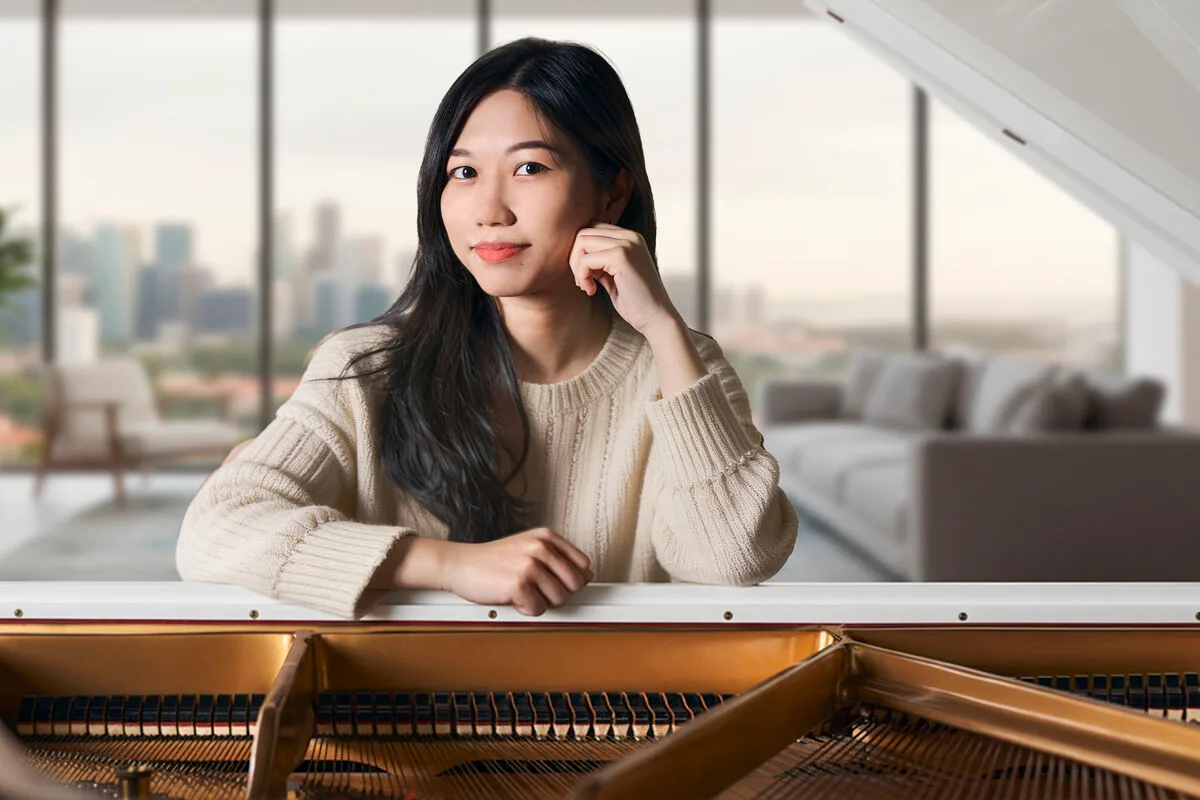
Patricia's Bachelor's degree in Early Childhood Education with Music Education means she approaches these challenges with a deep understanding of child development. She knows that a young child's proprioception — their sense of where their body is in space — is still developing, and that physical instructions need to be demonstrated and guided, not just explained verbally.
In practice, this means she uses gentle physical guidance to shape bow hold, creative imagery to help children understand posture ("imagine you're holding a bird — firm enough it doesn't fly away, gentle enough you don't squish it"), and carefully paced progression that never sacrifices technique for speed. The result is children who develop clean, tension-free playing habits from the start.
Understanding Young Violinists
How Children Learn Violin Differently
When an adult picks up a violin, they can intellectually understand concepts like "keep your wrist straight" or "transfer the weight from your arm into the bow." A four-year-old cannot. Young children learn violin through imitation, physical demonstration, and carefully guided repetition — their bodies learn before their minds can articulate what's happening.
This means early violin lessons look very different from what most parents expect. Instead of playing songs immediately, children spend time learning how to hold the bow with a relaxed hand, how to balance the violin under the chin without gripping, and how to draw the bow across an open string to produce a clear, even tone. These foundational skills are not glamorous, but they determine everything that follows.
A skilled children's violin teacher makes this foundational stage feel like play rather than work. Bow hold exercises become games. Posture checks become part of a routine that feels normal, not punishing. Open string exercises are turned into simple rhythmic patterns that sound musical even at the earliest stage.
Children also need more encouragement during violin's early stages than they do with piano, where pressing a key immediately produces a pleasant sound. The violin requires effort before it sounds good — and a teacher who celebrates that effort, who normalises the scratchy sounds, and who helps a child hear their own improvement week by week, makes all the difference.
Tailored by Age
Age-Appropriate Violin Lessons
First Steps with the Violin
At this age, lessons focus on getting comfortable with the instrument — learning to hold the violin and bow correctly, playing open strings with a controlled bow stroke, and beginning to place fingers on the strings for simple notes.
Sessions are kept short and varied. A typical lesson might include a posture check, a bow exercise, playing a few open-string rhythms, and a clapping or singing activity to develop rhythm and pitch awareness. Children use 1/4 or 1/2 size violins fitted to their arm length.
No exam pressure at this stage. The goal is building a comfortable, tension-free relationship with the instrument and developing the basic coordination that all future technique builds upon.
Building Technique and Musicality
Children in this range begin reading standard notation, learning scales in first position, and working through graded pieces. Bow control becomes more refined — learning to vary speed, pressure, and contact point to produce different dynamics and tonal colours.
Intonation training becomes more deliberate as children learn to hear whether their notes are in tune and make micro-adjustments with their fingers. Sight-reading and aural skills are introduced as regular lesson components. ABRSM Grades 1–3 preparation typically begins during this period.
Children usually transition from a 1/2 to a 3/4 size violin during these years. Patricia monitors sizing closely — a violin that's grown too small restricts technique and should be upgraded promptly.
Developing as a Violinist
Pre-teens tackle more demanding repertoire, learn shifting to third position and beyond, and begin developing vibrato — the gentle oscillation of pitch that gives the violin its characteristic warmth and expression.
Students working through ABRSM Grades 3–5+ develop stronger interpretive skills, learning to shape phrases, control dynamics, and bring their own musical personality to performances. Music theory deepens alongside practical work.
Many students move to a full-size (4/4) violin around age 11–12. This is also when children begin to take more ownership of their practice, developing the independent musicianship skills that will serve them through advanced levels and beyond.
The Right Fit
Why Fractional-Size Violins Matter
Unlike piano, where every child sits at the same instrument, violin requires a correctly sized instrument for each individual learner. A violin that's too large forces a child to overextend their arm, strain their neck, and develop compensatory habits that are painful to correct later.
Fractional violins — 1/4, 1/2, and 3/4 sizes — are specifically built for growing bodies. The correct size is determined by arm length, not age, since children of the same age can vary significantly in their physical measurements. As your child grows, they'll progress through sizes, typically needing a new instrument every 18–24 months during the early years.
Patricia measures each student at their first lesson and monitors growth throughout the year. She'll let you know when it's time to move up a size, and can recommend reputable violin shops in Singapore where you can purchase or rent the next instrument.
Violin Size Guide
- 1/4 size — typically for ages 4–5 (arm length ~35–43 cm)
- 1/2 size — typically for ages 6–8 (arm length ~43–51 cm)
- 3/4 size — typically for ages 9–11 (arm length ~51–56 cm)
- Full size (4/4) — typically from age 11–12 (arm length 56+ cm)
- Renting is often more practical than buying for younger children who outgrow sizes quickly
For Parents
Building Violin Practice Habits
Violin practice at home requires more parental involvement than many parents expect. Young children need help getting the violin out of its case, checking that it's in tune, and positioning it correctly before they can begin. This setup routine is part of building good habits — and it's an opportunity for parents to be involved without directing the practice itself.
For beginners, daily practice should be very short — even five minutes of focused bow exercises and open strings is more valuable than 20 minutes of unfocused playing. The goal is to make practice feel like a normal part of the day, not a battle. As children progress and their repertoire grows, practice time naturally extends.
Patricia provides specific practice instructions after each lesson — which exercises to focus on, what to listen for, and how to position the bow or fingers correctly. This helps parents support their child's practice without needing to be musicians themselves.
Tips for Violin Parents
- Help with setup — getting the violin out, tuning, and rosin on the bow
- Keep sessions short and consistent — daily is better than weekly
- Watch for tension in the shoulders, neck, or jaw during practice
- Praise effort and concentration, not just the sound produced
- Follow the teacher's practice notes — they're tailored to your child
Beyond Music
Benefits of Violin Lessons for Children
Ear Training
Develops acute pitch awareness — violinists must listen and adjust constantly
Coordination
Each arm does something different, building bilateral motor skills
Patience and Persistence
Violin rewards steady, daily effort — a powerful lesson in delayed gratification
Emotional Expression
The violin's vocal quality lets children express feelings through music
Confidence
Mastering a challenging instrument builds deep, lasting self-belief
Ensemble Ready
Violin opens doors to orchestras, string quartets, and group music-making
Real Feedback
What Parents Say
"Pat has such a gentle way with children. My daughter looks forward to her lessons every week! She's made incredible progress in just 6 months."
Sarah L.
Mother of Emily, Age 7
Location
Based in Tengah, Serving Families Across Singapore
Patricia's home studio is located in Tengah Garden Town — easily accessible from Bukit Panjang, Cashew, Hillview, Newton, and surrounding neighbourhoods. House visits are also available for families who prefer lessons at home. Also available: Violin Lessons Singapore | Violin Teacher Singapore.
Common Questions
Frequently Asked Questions
Is my 4-year-old ready for violin lessons? +
How long should a young child practise violin at home? +
What if my child finds violin too difficult and wants to stop? +
What size violin does my child need? +
Do I need to help my child tune their violin? +
Start Your Child's Violin Journey
Book a free consultation with Patricia to discuss your child's readiness, find the right violin size, and see what lessons look like.