
Designed for Young Learners
Children's Piano Lessons in Singapore
Children don't learn like adults. Their piano lessons shouldn't look like adult lessons either. Here's how thoughtful, child-centred teaching makes all the difference.
Why It Matters
Patricia's Early Childhood Background
Many piano teachers are excellent musicians. But teaching a four-year-old to play piano requires a different kind of expertise — understanding how young children develop, how they process information, and what keeps them engaged.
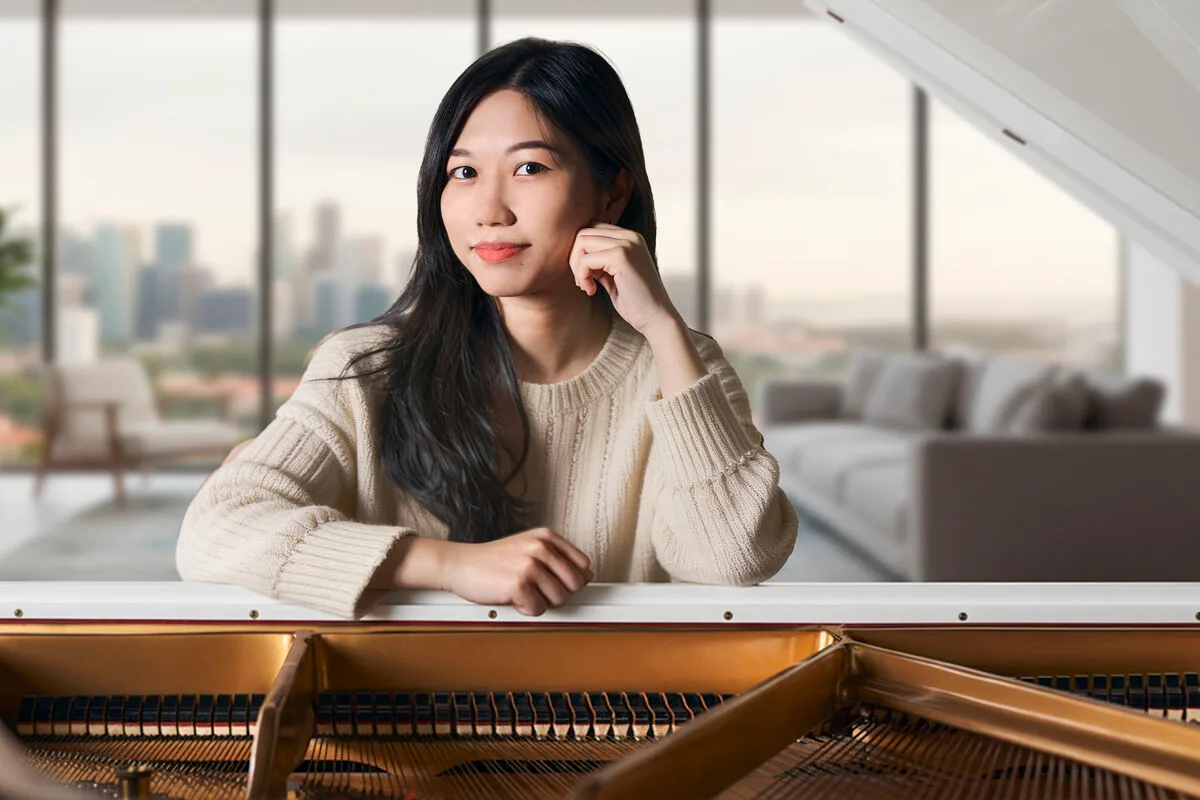
Patricia holds a Bachelor's degree in Early Childhood Education with Music Education. This means she doesn't just know piano — she understands child development, age-appropriate pedagogy, and the emotional needs of young learners.
In practice, this means she knows when a child needs encouragement versus a gentle challenge, how to explain concepts at the right level, and how to keep lessons feeling safe and enjoyable even when the work gets harder. It's the difference between a teacher who plays well and a teacher who teaches children well.
Understanding Young Learners
How Children Learn Piano Differently
Young children experience music with their whole body — not just their fingers. They learn through play, imitation, movement, and repetition. A teaching approach that works for teenagers or adults will often frustrate a five-year-old, not because they lack ability, but because their brains process information differently.
Attention spans are shorter and more variable at younger ages. A four-year-old might focus intently for ten minutes, then need to move around. A good children's piano teacher knows how to work with this — varying activities, switching between playing and listening, using games to reinforce concepts, and recognising when a child needs a break rather than a push.
Motivation in children is intrinsic. They practise because they enjoy it, not because they understand long-term goals. This means early lessons need to feel rewarding in themselves. When a child finishes a lesson feeling proud of what they played — even if it was just a simple melody — they'll want to come back.
Emotional safety matters enormously. Children who feel judged or pressured often develop anxiety around performing. The best learning happens when children feel comfortable making mistakes, asking questions, and trying things out without fear.
Tailored by Age
Age-Appropriate Piano Lessons
Discovering Music
At this age, lessons are about sparking curiosity and building foundational skills through play. Children learn to recognise high and low sounds, keep a steady beat, and begin associating keys with simple notation.
Sessions are kept short and varied — a mix of singing, clapping rhythms, exploring the keyboard, and playing very simple pieces. The goal isn't to rush through a syllabus but to help children fall in love with making music.
No exam pressure at this stage. Just building comfort, confidence, and a natural connection to the instrument.
Building Skills
Children in this range can handle more structured learning. They begin reading standard notation, developing finger independence, and working through graded repertoire. This is often when ABRSM Grades 1–3 preparation begins.
Sight-reading and aural skills become a regular part of lessons. Children also start learning about musical concepts like dynamics, tempo, and phrasing — not just playing the right notes, but playing them expressively.
The balance between structure and creativity is important here. Children need clear goals, but also the freedom to explore pieces they genuinely enjoy.
Growing Musicianship
Pre-teens are developing their own musical tastes and identity. Lessons at this stage focus on more complex repertoire, deeper musical interpretation, and building the discipline needed for higher-grade work.
Students working through ABRSM Grades 3–5+ learn to analyse music, understand form and structure, and bring their own expression to performances. Theory knowledge deepens in preparation for the Grade 5 theory requirement.
This is also when children can take more ownership of their practice. Lessons start to develop independent musicianship — the ability to learn and interpret new pieces with less guidance.
Beyond the Syllabus
The Role of Play and Creativity
Play isn't a break from learning — it is learning. When young children improvise melodies, make up stories about the music they hear, or turn scales into a game, they're developing musical understanding in the most natural way possible.
Research consistently shows that play-based approaches lead to better retention, stronger motivation, and deeper engagement in young children. Music education is no exception. A lesson that includes creative exploration alongside structured learning produces better results than drilling alone.
This doesn't mean lessons lack structure. It means the structure is designed around how children actually learn — through curiosity, experimentation, and the satisfaction of making something that sounds good.
What Play-Based Learning Looks Like
- Rhythm games using clapping, tapping, and body movement
- Making up short melodies and musical stories
- Listening activities that develop ear training naturally
- Exploring dynamics by playing loud/soft, fast/slow
- Fun challenges and rewards for practising at home
For Parents
Building Practice Habits
Consistent practice is the single biggest factor in a child's progress at the piano. But "practice" for a young child looks very different from what most adults imagine. It's not about sitting at the piano for 45 minutes — it's about building a daily habit that feels manageable and even enjoyable.
For younger children, 10–15 minutes a day is plenty. The goal is frequency, not duration. Five short sessions across the week are far more effective than one long session on Sunday evening. As children grow and their repertoire becomes more demanding, practice time naturally increases.
Parents play an important role — not by hovering over every note, but by creating a routine that makes practice a normal part of the day. Setting a consistent time, being nearby (without directing), and showing genuine interest in what your child is learning all make a real difference.
Tips for Parents
- Set a regular practice time — same slot each day works best
- Keep it short — quality over quantity, especially for young children
- Praise effort and improvement, not just the finished result
- Let your child play pieces they enjoy alongside assigned work
- Ask your teacher for specific practice goals each week
Beyond Music
Benefits of Piano Lessons for Children
Cognitive Development
Strengthens memory, concentration, and problem-solving skills
Fine Motor Skills
Develops finger dexterity and hand-eye coordination
Discipline
Builds patience, persistence, and a healthy work ethic
Emotional Expression
Provides a healthy outlet for feelings and self-expression
Confidence
Performing and mastering new skills builds self-esteem
Lifelong Skill
A musical foundation that stays with them forever
Real Feedback
What Parents Say
"Pat has such a gentle way with children. My daughter looks forward to her lessons every week! She's made incredible progress in just 6 months."
Sarah L.
Mother of Emily, Age 7
"We tried other teachers before, but Pat's nurturing approach finally got my son excited about piano. He now practices without being asked!"
Michelle T.
Mother of Ryan, Age 9
Location
Based in Tengah, Serving Families Across West Singapore
Patricia's home studio is located in Tengah Garden Town — easily accessible from Jurong West, Bukit Batok, Bukit Timah, Choa Chu Kang, and surrounding neighbourhoods. House visits are also available for families who prefer lessons at home.
Give Your Child the Gift of Music
Book a free consultation with Patricia to discuss your child's musical journey.