
A New Musical Chapter
Adult Violin Lessons in Singapore
The violin you've always wanted to play is waiting. Whether you're starting from scratch or dusting off a childhood instrument, adult violin lessons with Patricia are built around patience, proper technique, and the music you love.
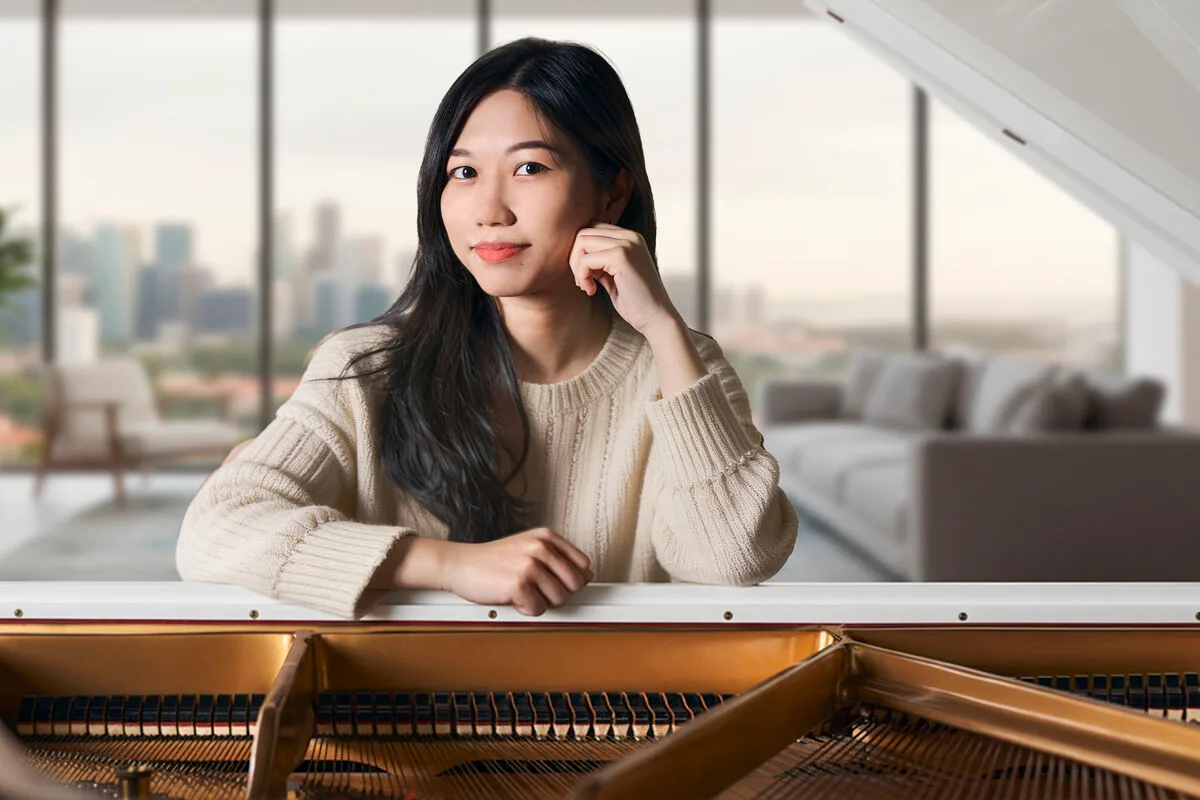
Your Teacher
Learning Violin with Patricia
Patricia brings over 10 years of teaching experience and a B.Ed in Early Childhood and Music Education to every lesson. While her formal training focuses on education pedagogy, her violin instruction is grounded in careful technique, patient progression, and genuine encouragement.
With adult students, Patricia adopts a collaborative teaching style. She explains not just what to do, but why — helping you understand the mechanics behind good tone production, proper bowing, and accurate intonation. Adults appreciate knowing the reasoning, and Patricia delivers it clearly.
She's also realistic about what adult life looks like. If you travel for work, have family commitments, or simply hit a week where practice wasn't possible, there's no guilt. Lessons pick up where you left off, with adjustments made to keep you moving forward at a sustainable pace.
Finding Your Reason
Why Adults Pick Up the Violin
The violin has a pull that's hard to explain. Maybe you heard a piece in a concert hall or a film soundtrack and thought, "I want to do that." Maybe you played briefly as a child and the memory stayed. Or maybe you simply want a challenge — something that demands your full attention and rewards you with beauty in return.
For many adults in Singapore, picking up the violin is an act of reclaiming something personal. After years of building a career, managing a household, or raising children, learning an instrument is a way of investing in yourself again. It's a pursuit that belongs entirely to you — not tied to work, not measured by productivity, and not for anyone else's benefit.
The orchestral dream is a real motivator too. Community orchestras across Singapore welcome adult beginners, and many of Patricia's students eventually join ensemble groups. There's something profoundly satisfying about playing in harmony with others — it's a social and musical experience that solo practice can't replicate.
And then there's the stress relief. The physical engagement of violin playing — the careful bowing, the precise finger placement, the controlled breathing — creates a form of active meditation. You can't multitask while playing violin. For adults dealing with the pressures of Singapore's fast-paced working life, that forced focus is its own kind of therapy.
Your Learning Journey
What to Expect from Adult Violin Lessons
Posture and Foundations
Violin technique matters from day one. How you hold the instrument, how you draw the bow, and how you position your left hand all affect your sound and your comfort. Patricia spends careful time on posture and setup because getting this right early prevents pain and bad habits later.
For adult beginners, this foundational work is especially important. Your body needs to learn new movement patterns, and Patricia knows how to teach these efficiently without overwhelming you.
No Rush, No Judgement
Adults often feel self-conscious about being beginners. Patricia creates a learning space where it's completely fine to struggle, ask questions, and take things slowly. There's no race to reach any particular level.
Lessons move at the pace that suits your ability and your schedule. If you can practise daily, you'll progress faster. If life gets busy, Patricia adjusts expectations without frustration.
Classical to Contemporary
While classical pieces form the backbone of violin technique, your lessons aren't limited to Bach and Mozart. Patricia incorporates contemporary arrangements, film music, folk melodies, and popular tunes to keep learning varied and enjoyable.
If there's a specific piece that inspired you to start violin, Patricia will work it into your lesson plan — even if it means creating a simplified arrangement to match your current level.
Let's Address These
Concerns Every Adult Violin Beginner Has
"Is violin harder than piano?" — They're different challenges. Piano lets you produce a pleasing sound immediately by pressing a key, while violin requires you to create the sound yourself through bowing and intonation. The early weeks of violin demand more patience, but many adults find the physical engagement of violin deeply satisfying. The instrument becomes an extension of your body in a way that piano doesn't.
"I'm starting at 40 — can my fingers even do this?" — Yes. Adult hands are actually well-suited to violin. You have the finger strength and hand span that children lack. While flexibility may take some developing, the fine motor control you've built over decades of daily life transfers more than you'd expect. Patricia works with your body, not against it.
"How long before I sound decent?" — Most adult beginners produce a clean, pleasant tone within the first month of focused practice. Within 3–6 months, you'll be playing recognisable melodies with growing confidence. By the end of the first year, you'll be tackling beginner repertoire that sounds genuinely musical. The trajectory is faster than most people expect.
The Rewards of Adult Violin
- A portable instrument you can take anywhere — play at home, in parks, at gatherings
- Access to community orchestras and ensemble groups across Singapore
- Improved posture, coordination, and body awareness
- Deep focus that acts as genuine stress relief after work
- The pride of mastering an instrument many consider the most expressive
Common Questions
Frequently Asked Questions
Is violin harder to learn than piano as an adult?
Violin has a steeper initial learning curve because there are no frets or keys — you need to develop intonation (playing in tune) from the start. However, adults who commit to regular practice typically produce a pleasant tone within a few weeks and can play simple melodies within a couple of months. The challenge is part of what makes violin so rewarding. Patricia guides you through the early stages with patience and clear technique instruction.
I'm starting violin at 40 — is that realistic?
Completely realistic. Many of the world's most dedicated amateur musicians started as adults. At 40, you have the focus, patience, and self-awareness to learn efficiently. Your body is more than capable of developing the necessary coordination. Patricia has worked with adult beginners across a range of ages and consistently sees meaningful progress within the first few months.
How long before I sound decent on the violin?
With consistent practice of 20–30 minutes daily, most adult beginners can play simple pieces with a pleasant tone within 3–4 months. Within a year, you'll be able to play through beginner-level classical pieces and popular melodies with confidence. 'Sounding decent' is subjective, but you'll pass that threshold sooner than you expect — and the improvement curve steepens over time.
Do I need to buy a violin before my first lesson?
Not necessarily. Patricia can advise you on renting or purchasing a suitable instrument during your initial consultation. Renting is a practical option for beginners — it lets you start with a quality instrument without a large upfront cost. She'll help you choose the right size and quality level so you're not held back by a poor instrument.
Location
Based in Tengah, Accessible Across West Singapore
Patricia's home studio is located in Tengah Garden Town — convenient for adults living or working in Jurong West, Bukit Batok, Bukit Timah, Choa Chu Kang, and surrounding neighbourhoods. House visits are available for those who prefer learning at home.
Pick Up the Violin You've Always Wanted to Play
Book a free consultation with Patricia to discuss your goals, ask questions, and see if violin lessons are right for you.